Hazardous Soil: Classification, Testing and Disposal Guide
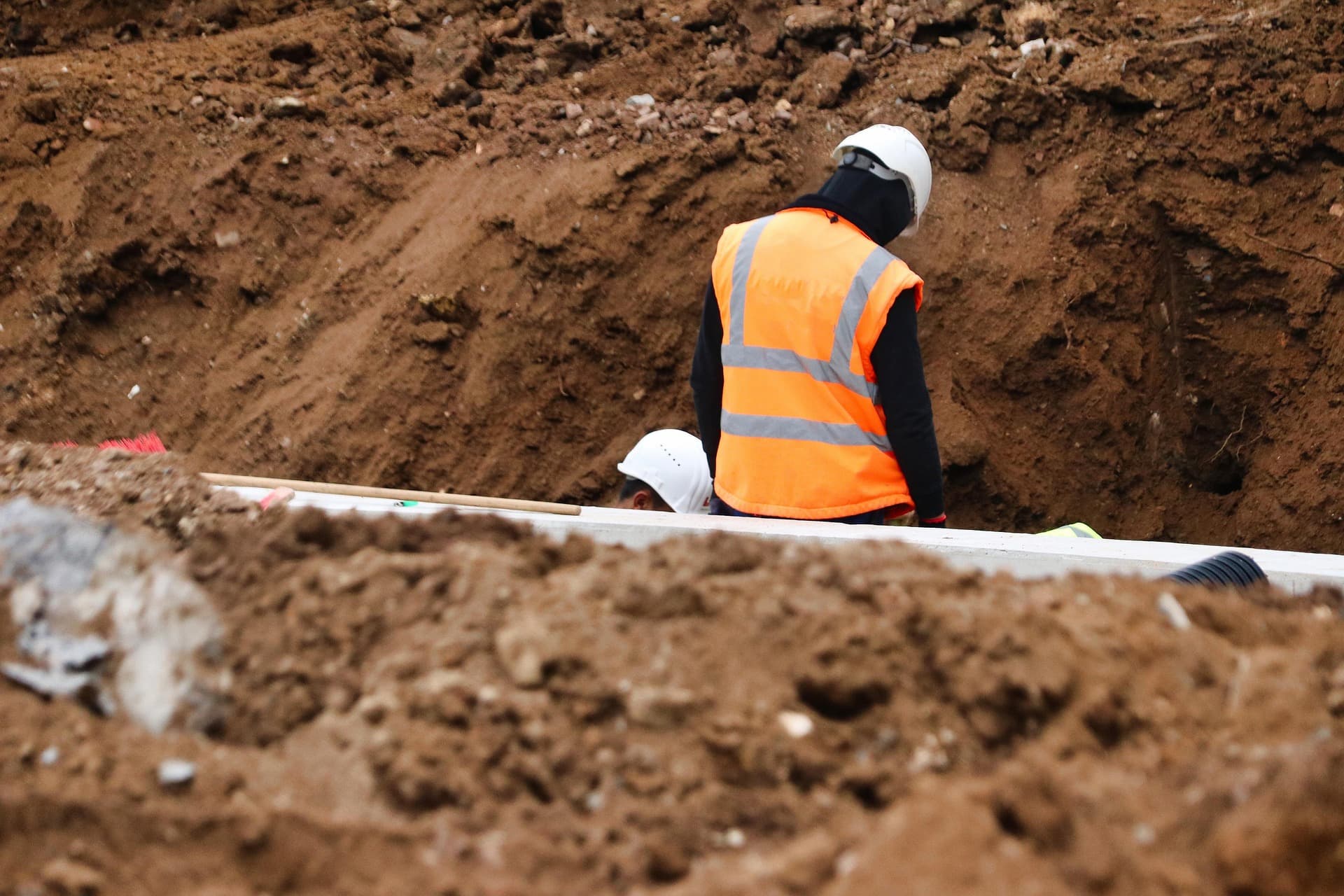

Hazardous soil refers to excavated or surplus soil that qualifies as hazardous waste because it contains hazardous substances or has one or more hazardous properties at a level that meets the relevant classification criteria.
You may encounter hazardous soil on construction, demolition, remediation and infrastructure projects. In particular, it can arise where previous industrial, commercial or other potentially contaminative activities have affected the ground.
However, you cannot simply treat hazardous soil as ordinary excavated material. Before you remove it from site, you need to assess and classify it correctly. You must also handle, transport and dispose of it through appropriate permitted routes.
Therefore, if you have excavated soil that may be contaminated, start by establishing what the soil contains, how much material you have and how the law classifies the waste.
Hazardous soil is soil that meets the regulatory criteria for classification as hazardous waste.
Importantly, the presence of a contaminant does not automatically make soil hazardous. Instead, the classification depends on the substances present, their concentrations and properties, and the relevant hazardous waste criteria.
Common contaminants in potentially hazardous excavated soil include:
The potential source of contamination can indicate which substances may occur. However, laboratory analysis will normally provide the information needed to characterise the waste properly.
For example, soil from a former petrol station may require investigation for petroleum hydrocarbons. By comparison, ground from a former industrial site could contain a wider range of metals, PAHs, solvents or other contaminants.
There is an important distinction between contaminated soil and hazardous soil.
Contaminated soil may contain substances of concern but still qualify as non-hazardous waste. This can happen when the concentrations and properties do not cause the waste to meet the relevant hazardous classification criteria.
Hazardous soil, however, meets the applicable criteria for hazardous waste.
For this reason, you should not automatically use the terms “contaminated soil” and “hazardous soil” interchangeably.
Instead, base the classification on the characteristics of the actual waste rather than its history or appearance. Soil can look perfectly normal and still require hazardous waste classification. Conversely, soil containing detectable contamination may not necessarily qualify as hazardous.
For excavated soil and stones from construction and excavation activities, the relevant List of Waste (LoW) category generally falls under 17 05 – soil, stones and dredging spoil.
The key entries include:
| EWC / LoW code | Description |
|---|---|
| 17 05 03* | Soil and stones containing hazardous substances |
| 17 05 04 | Soil and stones other than those mentioned in 17 05 03 |
The asterisk matters because it identifies a hazardous waste entry.
The Environment Agency’s waste classification guidance identifies 17 05 03* as a hazardous entry and 17 05 04 as its non-hazardous counterpart.
However, you should establish the correct waste code as part of the waste classification process. Do not select a code simply because the soil came from a contaminated site.
Other waste codes can also apply depending on the material’s source and composition. For example, waste from soil remediation can fall within the 19 13 category.
Before you send hazardous soil for disposal or recovery, you need to classify the waste correctly. The exact process depends on the project, but it will typically involve several stages.
First, establish where the soil came from.
Information from a site investigation, desk study, previous land use, remediation report and excavation records can help identify potential contaminants.
Next, identify which substances may be present.
Depending on the site, these could include:
The site history will help determine which contaminants require investigation.
Representative samples may need to go to an appropriately competent laboratory for analysis.
The required testing depends on the site’s history and the suspected contamination. Therefore, there is no single testing suite that suits every excavation.
Once the laboratory has provided the analytical results, assess them against the relevant waste classification criteria.
At this stage, you need to determine whether the soil qualifies as:
A waste producer must assess and describe the waste before sending it for recovery or disposal. GOV.UK specifically identifies 17 05 03* soil and stones containing hazardous substances as an example of a waste stream that may require classification.
After classification, confirm that the receiving facility can legally accept the waste.
A waste classification does not mean that every landfill or treatment facility can accept the material. Therefore, check the facility’s permitted waste types and acceptance requirements before arranging transport.
One common mistake on construction projects involves assuming that all contaminated soil qualifies as hazardous waste. It does not. The difference comes down to the waste classification.
Inert waste does not undergo significant physical, chemical or biological transformation. It must also meet the relevant requirements for inert waste.
For landfill disposal, inert waste must meet applicable Waste Acceptance Criteria (WAC), including relevant leaching limits.
Suitable uncontaminated excavated soil and stone may qualify as inert after appropriate assessment.
Non-hazardous soil may contain contaminants without meeting the criteria for hazardous waste.
Even so, it may still require testing, documentation and an appropriate permitted disposal or recovery route.
Hazardous soil meets the relevant hazardous waste criteria.
As a result, its management requires greater controls. For example, you need to ensure that the receiving facility has permission to accept the waste.
The Environment Agency recognises separate landfill classes for inert, non-hazardous and hazardous waste. Each class has its own acceptance requirements.
No.
This is an important point for anyone planning a remediation or excavation project.
The presence of contamination does not automatically mean that you must send the soil to a hazardous landfill.
First, classify the waste correctly. Then, once you understand its classification and characteristics, consider the available management options. Depending on the circumstances, these may include:
The most suitable route depends on the contamination, waste classification, physical properties, project requirements and available facilities.
The Environment Agency also recognises routes for waste recovery. However, contaminated or non-inert material may require sampling, analysis and further assessment before a facility can accept it for recovery.
A typical process may look like this:
Site investigation → Soil sampling → Laboratory analysis → Waste classification → Facility approval → Collection → Transport → Treatment/recovery or disposal
Before accepting the waste, the receiving facility will normally need sufficient information about the material. This may include:
The Environment Agency guidance requires landfill operators to check the waste classification and confirm compliance with the relevant waste acceptance criteria before they accept waste.
The required testing depends on the site and the proposed waste route.
There is no sensible “one size fits all” analytical package because the likely contaminants depend on the site’s history and the material being excavated.
For example:
| Potential source | Contaminants that may be investigated |
|---|---|
| Former petrol station | TPH, BTEX and other petroleum hydrocarbons |
| Industrial site | Metals, PAHs, hydrocarbons and site-specific contaminants |
| Former gasworks | PAHs, hydrocarbons, cyanide and other contaminants |
| Agricultural land | Pesticides, herbicides and metals |
| Railway land | Hydrocarbons, metals, PAHs and other site-specific contaminants |
| Made ground | Variable; depends on historical fill and previous land use |
Design testing around the site investigation and the intended waste route.
Remember that the laboratory report forms only one part of the process. You also need to interpret the analytical results as part of the overall waste classification.
Waste Acceptance Criteria, commonly called WAC, determine whether certain waste is acceptable at a particular class of landfill.
However, WAC testing is not the same as waste classification.
Waste classification determines whether the waste is:
Hazardous, non-hazardous or inert.
WAC testing determines:
Whether the waste meets the acceptance criteria for the proposed landfill route.
These assessments are related, but they serve different purposes.
The Environment Agency states that landfill operators must only accept waste that meets the relevant waste acceptance criteria for the relevant landfill class.
For example, material going to an inert landfill needs to meet applicable leaching limits and other requirements.
There is no single price for hazardous soil disposal.
Instead, the cost can vary considerably depending on:
For this reason, price hazardous soil disposal against the available analytical information wherever possible.
A cheaper-looking disposal option may not prove suitable if the facility cannot legally accept the waste. Additional treatment or testing can also increase the final cost.
Potentially, yes.
Disposal does not always need to be the first option. Depending on its classification, composition and intended use, excavated soil may be suitable for treatment or recovery.
However, you cannot simply move contaminated material to another site and describe it as “fill”. The proposed recovery route must comply with the relevant environmental permitting requirements and suit the material.
The Environment Agency’s guidance on deposit for recovery states that waste must be characterised against the waste classification guidance. Non-inert or potentially contaminated waste may also require sampling and analysis.
Where recovery is possible, it can reduce the amount of material that needs landfill disposal. It may also provide a more sustainable solution for a construction project.
Once you classify soil as hazardous waste, the collection and transport arrangements need to reflect that classification.
The waste producer remains responsible for ensuring that the waste receives an accurate description and moves through an appropriate waste management route.
The carrier and receiving facility must also be suitable for the waste being transported and accepted.
In addition, the paperwork and information accompanying the waste should accurately describe:
Importantly, do not classify the waste differently simply to obtain a cheaper disposal route.
Testing and classification before large-scale excavation can prevent significant problems later.
If you excavate contaminated soil before confirming the disposal route, you could face stockpiling issues, additional testing, unexpected costs and programme delays.
Early assessment gives the project team a much clearer understanding of the material that will leave the site. It also helps the team plan the appropriate management route.
This is particularly important on large developments where thousands of tonnes of soil may require removal.
If you need to arrange hazardous soil disposal, having key information available can make the process considerably easier.
Where possible, provide:
You do not necessarily need every item before someone can assess the material. However, additional investigation or testing may be necessary before a disposal route can be confirmed.
What is the EWC code for hazardous soil?
For construction and excavation waste, 17 05 03* covers soil and stones containing hazardous substances. The corresponding non-hazardous entry is 17 05 04.
However, confirm the correct code as part of the waste classification process.
Is contaminated soil hazardous waste?
Not necessarily.
Contaminated soil may qualify as non-hazardous depending on the contaminants present, their concentrations and the applicable hazardous waste criteria.
Can soil containing hydrocarbons be hazardous?
It can be. However, hydrocarbons alone do not automatically determine the classification.
You need to assess the type and concentration of the substances and their relevant hazardous properties.
Can soil containing asbestos be hazardous?
Potentially.
Asbestos-containing material requires particular care. The correct classification and disposal route depend on the nature and characteristics of the waste.
Therefore, do not assume that a small amount of asbestos automatically determines the same classification in every circumstance.
Does hazardous soil need to go to landfill?
Not necessarily.
Depending on its characteristics and the available permitted routes, hazardous or contaminated soil may potentially undergo treatment or recovery rather than simply going to landfill.
Do I need to test soil before disposal?
Where you cannot establish the classification or acceptance route from existing information, testing may be required.
The appropriate testing depends on the site history, suspected contaminants and proposed waste route.
What is the difference between soil classification and WAC testing?
Waste classification determines the status and characteristics of the waste.
By comparison, WAC testing establishes whether the material meets the acceptance requirements for a particular landfill class.
Can hazardous soil be reused on another site?
Not simply because it is excavated soil.
Any proposed reuse or recovery route needs to comply with the relevant environmental requirements and suit the material.
Potentially contaminated or non-inert waste may also require sampling, analysis and further assessment.
Need to dispose of hazardous soil?
If you have excavated soil that may be contaminated, getting the classification and disposal route right before moving the material can save time, avoid unnecessary costs and prevent project delays.
We can help assess your requirements and arrange an appropriate route for hazardous and contaminated soil from construction, demolition, remediation and development projects.
Provide details of the site, estimated tonnage and any available laboratory results or waste classification information. We can then advise on the next steps.
Contact our team to discuss your hazardous soil disposal requirements.
